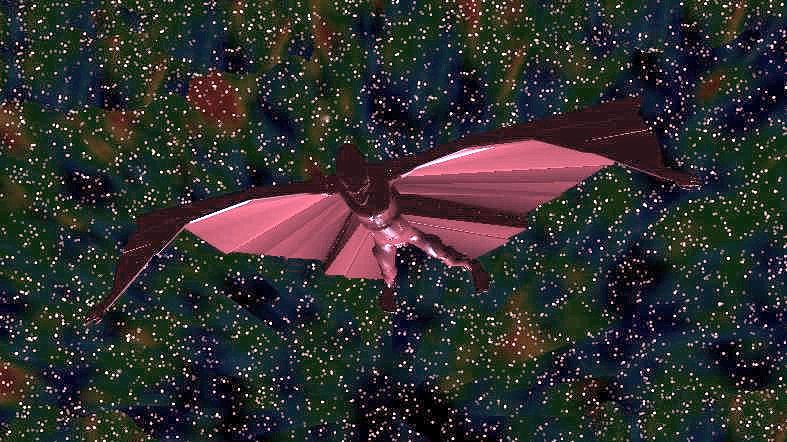
|
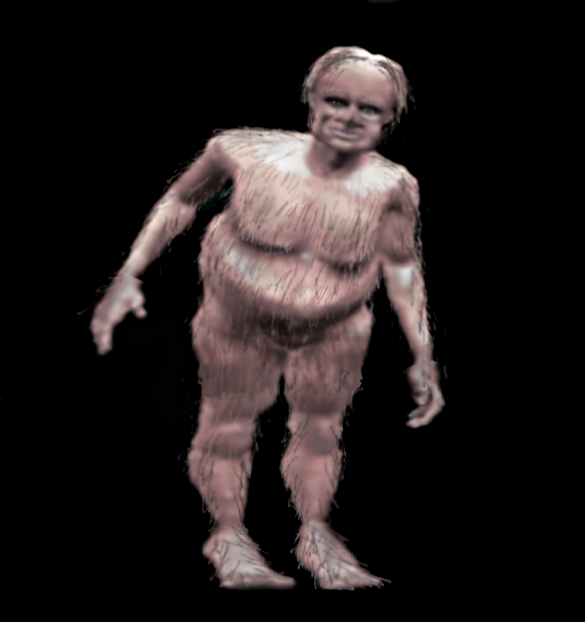
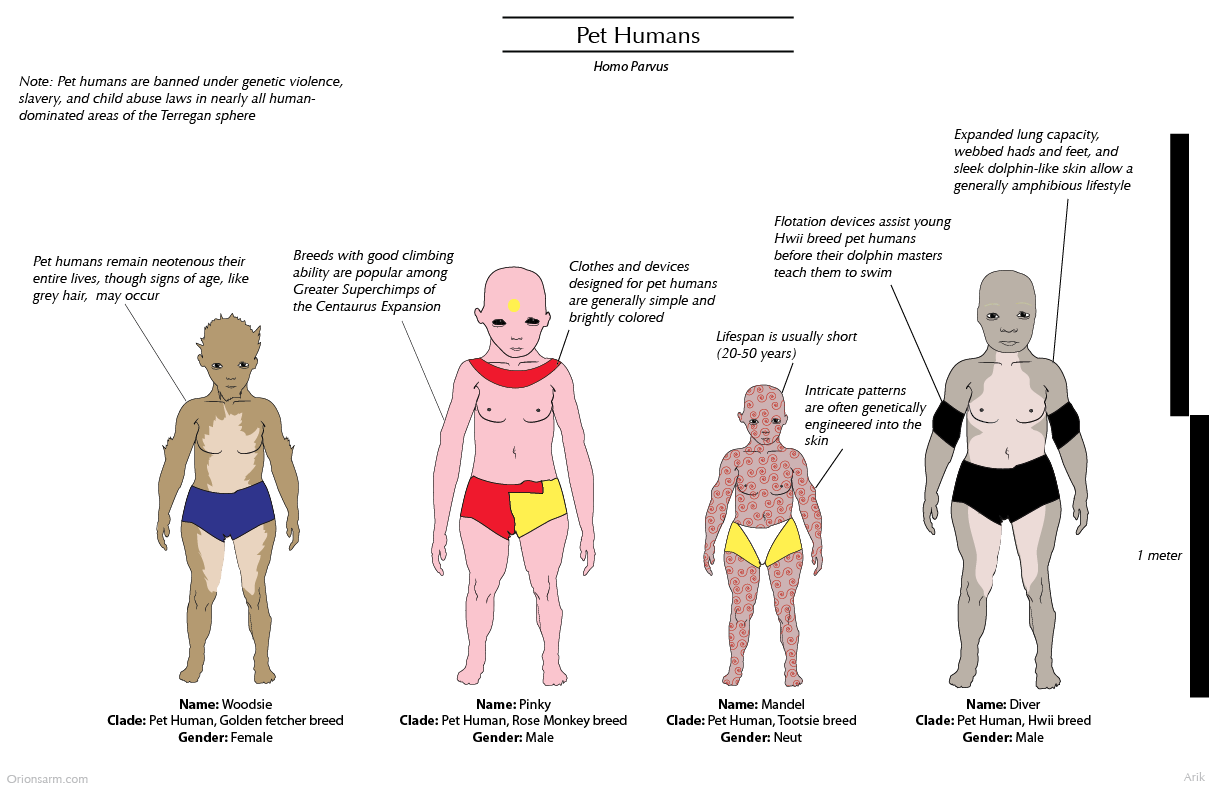
The diminutive Methusela clade,
with the strange backwards pointing knees which give them a gait something like a chicken |
Prelude - Life Extension during the Information Age
During the
Information Age,
gengineering experiments and - later - commercial genemods - were
concerned not only with increased intelligence, artistic and athletic
ability, physical prowess and resistance to disease, but also general
longevity, and "correcting natures mistakes" in order to design a body
better able to exist for longer periods. Some of these ideas went back
top the turn of the 21st century [1], although it was to be many decades
before these approaches became viable in practice.
Lifespan-enhancement
involved many factors, each of which had to be dealt with separately.
Osteoporosis, cancer, weakening muscles, clogging arteries, organ
failure, genetic copying errors, and telomere degradation were only a
few of the problems that had to be dealt with. Progress was slow, and
optimistic projections frequently failed to eventuate.
By the late Information Age however the developing biopunk subculture,
ribophunk
freelancers, and big genetech corporations had managed to solve many of
these problems, and those that could not be solved without reliable
advanced medical nanotech (still over a century away) were at least
ameliorated. The result was that the emerging wave of "Homo superior"
not only had estimated lifespans in the order of several centuries with
bionanotech, and at least 120- to 150 without, but remained youth and
fully robust for most of that time.
As such biotechnology was
often resource hungry, requiring either wealth, technosavvy, a network
of friends and co-workers, or all of the above. Thus in addition to the
unofficial but entrenched caste system of digitally literate and
illiterate, there emerged the bio-augmented advantaged (sometimes called
gattacas, a reference to an old 2D that became a classic among the
disenfranchised) and the biologically disadvantaged.
The emergence of Homo methuselus
In the corporate, image, and fad and fashion driven world of 22nd
century Earth, looks and appearance were as important as talent and
intelligence. Even the biopunks and ribophunks, now feted as
celebrities, had become less interested in ground-breaking work on
improving the human condition, and more in preserving their public
image. Funky feather eyebrows and scaly or leopard-fur skin was cool, a
purely functional form that departed from the norm was not. For this
reason, the most daring experiments were conducted in the
Free Zone
micronations like Academion, Mogadishu, and Lyonesse, and later, up the
Well in the brave new world of the orbital utopias like New Academion,
O'Neil One and Two, Clarke Station, and Orbital Israel.
By no
means the most extraordinary of these experiments, but still one to have
a great impact even so, was the Methuselah Project, initiated in 2148
c.e. (179 a.t.). A team led by Dr Darwin Jamie Pennak, second generation
superbright and part-time consultant for Biotopia, and ex-Modernbody
biohack Patricia Heng, decided to pull out all stops and create a true
Methuselah - "longevity as if aesthetics did not matter". They took the
human body and decided to design it as if evolution had selected for
longevity and functional life of a century and more even without bionano
or telomerose treatment.
The result was what would have to be one of the least attractive of the "new species" Almost every part of the
anatomy was redesigned on the basis of optimal function.
The
most obvious difference was in the stature of the new species. The
inefficient upright posture was replaced with a forward-leaning stance;
the body was also tilted forward to relieve pressure on the vertebrae
and the lower back. The neck thrust forward, as well as being thickened,
to make it easier to hold up the heads. The height was reduced to help
prevent falls and hip fractures caused by aging. The legs were padded
with more fat, muscle and thicker bones to withstand falls. More
difficult to organise, the knees were made to bend backward, so the wear
and tear on the knee and foot joints was reduced. Much of the internal
anatomy, the digestive and urogenital tracts, glands, eyesight, and
hearing were all redesigned. The ears were enlarged and pointed, to
increase the amount of sound they can conduct. They could also move back
and forth to better focus sound. The cornea was optimised, balance and
coordination improved, and more.
The result was a hominid in appearance remarkably similar to a short and chubby roleplayer's elf.
Life in the Solar System, and Beyond
In 199 a.t. the first of the methuselii, Adam-Methuselah, reached maturity in The
Aquarius
Free States. He was soon joined by his siblings. Although reasonably
intelligent, they did not have superbright intellects, as their whole
purpose had been optimised life extension. The Methuselah Project closed
soon after; in any case, Pennak, Heng, and the rest of the team had
long since moved on to other things, taking the property rights of the
methuselah genome with them. It was the low point of despair for the new
parahumans. As Adam-Methuselah was later to say, perhaps with
understandable bitterness, in his memoirs "no-one was interested in ugly
little dwarves who could live forever" [2]. But with the help of
several human rights groups and a friendly
AI,
and after an extended legal battle, the methuselii eventually got legal
possession of their geneprint. They migrated up the Well to Clarke
Orbital, where they were given citizenship and like many newcomers took
the surname "of Clarke", The solar system was being opened up to
colonization and development, and the robust and compact little
methuselahs found work was available on the frontier, where no-one cared
what you looked like, as long as you could get the job done, and do it
well.
It was during this time that the name "the squats" was
first used to refer to these stocky tweaks. It was part of the frontier
culture, along with "gookle", "etie" (for space adapts), "tinhead" (for
cyborg) and "beastie boy" (for
rianth). Some wore the handle with pride, others resented it
With
longevity and rejuvenation treatments available for those who could
pay, the growing Methuselah clade were the first true immortals - their
bodies were optimised for 200 year lifespans even without any treatment
at all; with longevity treatment they could continue for literally
thousands of years with little need for further augmentation. Many
invested in long-term projects like Oort mining and interstellar
development
The attitude of the methuselahs to wetware and other
such augmentations was variable. Although A-M ofClarke enthusiastically
embraced the new technology "as a way of staying competitive", others,
especially the faction headed by his younger brother Noah ofClarke
refused to have anything to do such things, an attitude Adam-Methuselah
himself found puzzling. On the other hand there were some who went for
radical augmentation and hybridization to the extent that they were no
longer recognisably methuselan. Thus, from even a relatively early
period, the small clade was rent by dissensions and schisms. But in all
this, Adam-Methuselah retained a firm hand of leadership, although some
put this down to several hyperturings, including Tarith-5 of O'Neill,
and another Adam, Adam-24-c of New Academion, who had advised him with
legal matters in the fight over Methuselah genome ownership, and were
actually grooming the clade for reasons of their own (most probably
scientific or anthropological curiosity, although in his autobiography
Adam-24-c has strenuously denied this ).
Like many outward moving clades, the methuselahs were little effected by the
Technocalypse
that brought such devastation to the inner solar system, but the
isolation of the surviving habitats only served to deepen the rift
between the Adam-Methuselites, the Noaites, and the various cyborg
factions of the clan. By the time the
First Federation
had revived civilization, there were no less than half a dozen
methuseline species and subspecies in the Sol System, and an unknown
number already outsystem (we know that the Clan Lamech reached the
Barnard Belt in 882 on the "
backyarder" vessel
Jerry Pournelle).
Each of these one claiming to be the "true methuselah". And while
Adam-Methuselah's faction (the largest of the 6 solsystem clans) voted
almost unanimously to join the Federation, most of the others, fearing
assimilation or subversion, chose to remain autonomous.
The
methuselahs found their talents in high demand in the Federation. As
ships were not yet capable of relativistic velocity, there was need for
long-lived bionts to serve as crew during the long voyage. The stolid,
phlegmatic tweaks were quite happy to spend decades having the run of
the ship, especially if there was a suitable commission (usually
anywhere from 0.5 to 2% of new planetary development) as part of the
deal. Not only many paranoid anti-ai groups, but even mainstream venture
start-ups, found this a reasonable offer. As a result, the methuselahs
grew very wealthy indeed. Even the emergence of relativist ships did not
phase them, for not all corporations or individuals could afford the
technology or the amount of
amat needed to push a ship to such a high fraction of the speed of light.
With the development of the wormhole Nexus, the rise of the
archailect
empires, and the increasing availability of amat and reactionless drive
vessels, the methuselahs fell from prominence. Even so, managed
investments ensured that those who wished to remain in the settled
worlds could do in comfort and luxury. And those that wished to move
outward to the ever expanding frontier, to find new worlds and
investment opportunities, were also able to. Many established successful
and long-lived populations in many of the ordinary (non-transapient
managed)
middle tech societies, and a lesser number of
high tech societies, especially in the
Inner Sphere and
Hinterworld regions
The Methuselahs Today
Among the Old Houses in the galaxy, methuselahs today are renowned as
the most stolid, unimaginative and dull of all. They have no pomp, no
spectacle, no servants (not even turingrade drones), no finery. They are
more likely to invite the visitor into their habitat for a bulb of
biofabricated coffee, and are known to raise the bemused eyebrow if ever
addressed with standard aristocratic honorifics like 'Excellency" or
"Majesty" or "Greatest Zar". They have also changed remarkably little in
the last ten thousand years. They still look like a
baseline
six-year old with pointy-ears on steroids. Most have minimal wetware
augmentation, usually only enough to interact comfortably with the
household appliances. Many have been cheated out of their inheritance by
more cunning sentients, but have just shrugged off the whole affair and
taken up a life on the spacelines, or some development project in the
Outer Volumes, where they seem to enjoy doing the sort of long-term tedious maintenance work they have become renowned for.
Not
a single methuselahs is known to have ever breached even the first
singularity toposophic - hence the expression "about as likely as a
hyperbright squat"
References
Adam-24-c,
My Life and other Stories, vol.1 node e-iii, Eden Interactives, 3851 a.t.
Adam-Methuselah of Clarke,
Unfinished Memoirs, Atlantis Media Webooks, O'Neill Three, 2451 c.e. (482 a.t.) (reissued Alexandria Archives - Memory Node "C")
S. Jay Olshansky, Bruce A. Carnes and Robert N. Butler,
Scientific American, March 2001 c.e. (31 a.t.) (reissued Alexandria Archives - Memory Node "C")
Darwin Jamie Pennak, Patricia Heng, Morris Mkome, and Sanyo Lee, (ed.)
The Methuselah Project, New Academion Modern Classics of Science, 2112 c.e. (143 a.t.) (reissued Alexandria Archives - Memory Node "C")
Source : http://www.orionsarm.com/eg-article/47f2fce0d2931








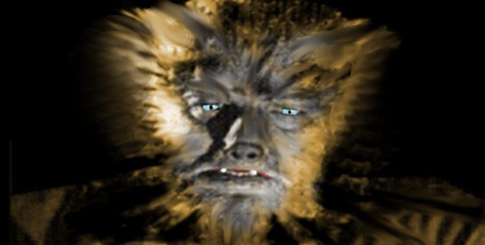
 Werewolves are an ancient example of pseudolazurogenics based on mythological and folkloric shapeshifters. These rianths
are distinguished by a lupine physiology, created in part by
incorporating DNA from canine sources into the host genome. Historians
generally agree Werewolves were the first example of a true rianth clade
capable of endogamy.
Werewolves are an ancient example of pseudolazurogenics based on mythological and folkloric shapeshifters. These rianths
are distinguished by a lupine physiology, created in part by
incorporating DNA from canine sources into the host genome. Historians
generally agree Werewolves were the first example of a true rianth clade
capable of endogamy.